We ventured into Central Slovakia for the first time, to Banská Štiavnica. After enduring a one-hour railway workers' strike, we took three trains to reach our destination. A small town now south of Banska Bystrica and Zvolen, it has been focused on mining since the twelfth century, or perhaps longer. That area of the Small Tatra range has, or has had, rich deposits of precious, semi-precious, or just plain useful minerals. At one time the area boasted the richest deposits of gold and silver anywhere in Europe, and in the sixteenth century the Hapsburgs used the treasure pulled out of these mountains to finance the wars against the Turks, and to pay for the Counter-Reformation In Central Europe.
We visited the old castle (a forttification born of a church, built between 1552 and 1559), toured an open-air mining museum, saw a wonderful mineral exhibit, and took in much of the sixteenth- and seventeenth-century architectural glory of the town. When the area produced wealth, many Austro-Hungarian swells built palaces, and "like a fossil preserved in amber, Banská Štiavnica is a town frozen in time." Of course, it helps that the town became a UNESCO World Heritage Site in 1972 and the Norwegians came with their North Sea Oil money to finance restoration. And--we ate well! We'll let pictures tell the story. Sunday morning dawned clear, so we hiked up to Calvary, a 1930s stations-of-the-cross exercise up a steep hill. The stations and three chapels are pretty run down now, but the views are unparalleled. We only got a chance to walk around the New Castle (so named because it was built five years after the old one) before we had to head home.
 |
| But things got better... |
 | ||||
| The column on the right is for delays. |
 |
| The Horse we came in and left on. |
 |
| The Old Castle... |
 |
| Let me in! |
 |
| The basilica which became a fortress. |
 |
| Beginning a BBQ, but we didn't get invited |
 |
| An archer's view |
 |
| Inside the chapel-turned-mortuary |
 |
| A sixteenth-century fresco |
 |
| The well could be drained and used for escape |

 |
| The city |
 |
| Hungary, including Slovakia |
 |
| The Miners' Gild (crossed hammers) |
  |
| A metal door is a metal door, unless it has seventeenth century graffiti |
 | ||
| Lilliput, or Wonderland? |

 |
| Going to work in a mine |
 |
| Young or old, hard hats are in |

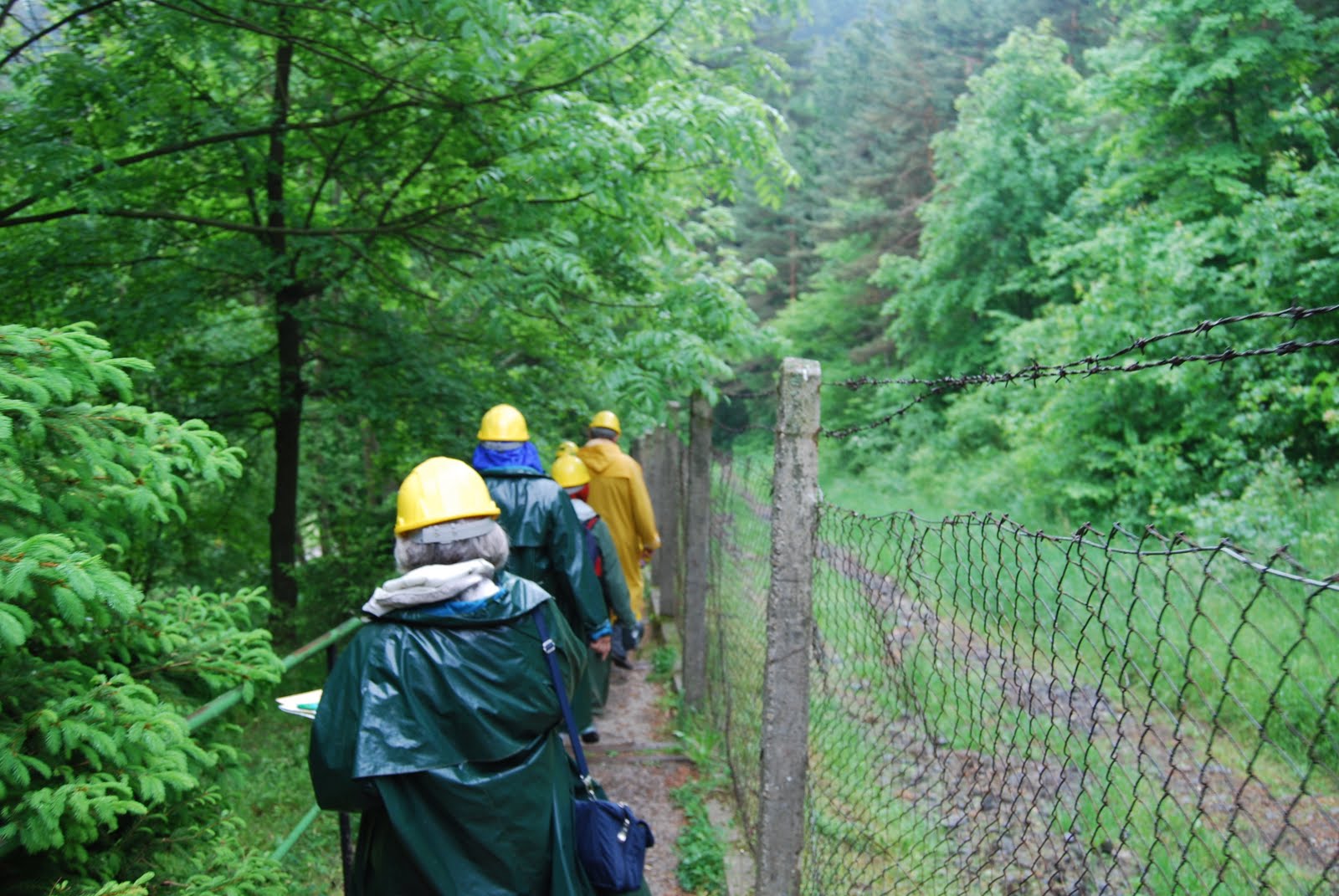 |
| Follow the yellow hats.... |

 |
| but don't touch the wires! |
 |
| The necessary room |
 |
| Crossed hammers in the mine |
 |
| Modern mining |
 |
| Above ground |
 |
| Wonderful food |
 |  |
| This is goulash? |
 |
| Climbing to Calvary early Sunday |
 |
| Making progress.... |
 |
| Near the top |
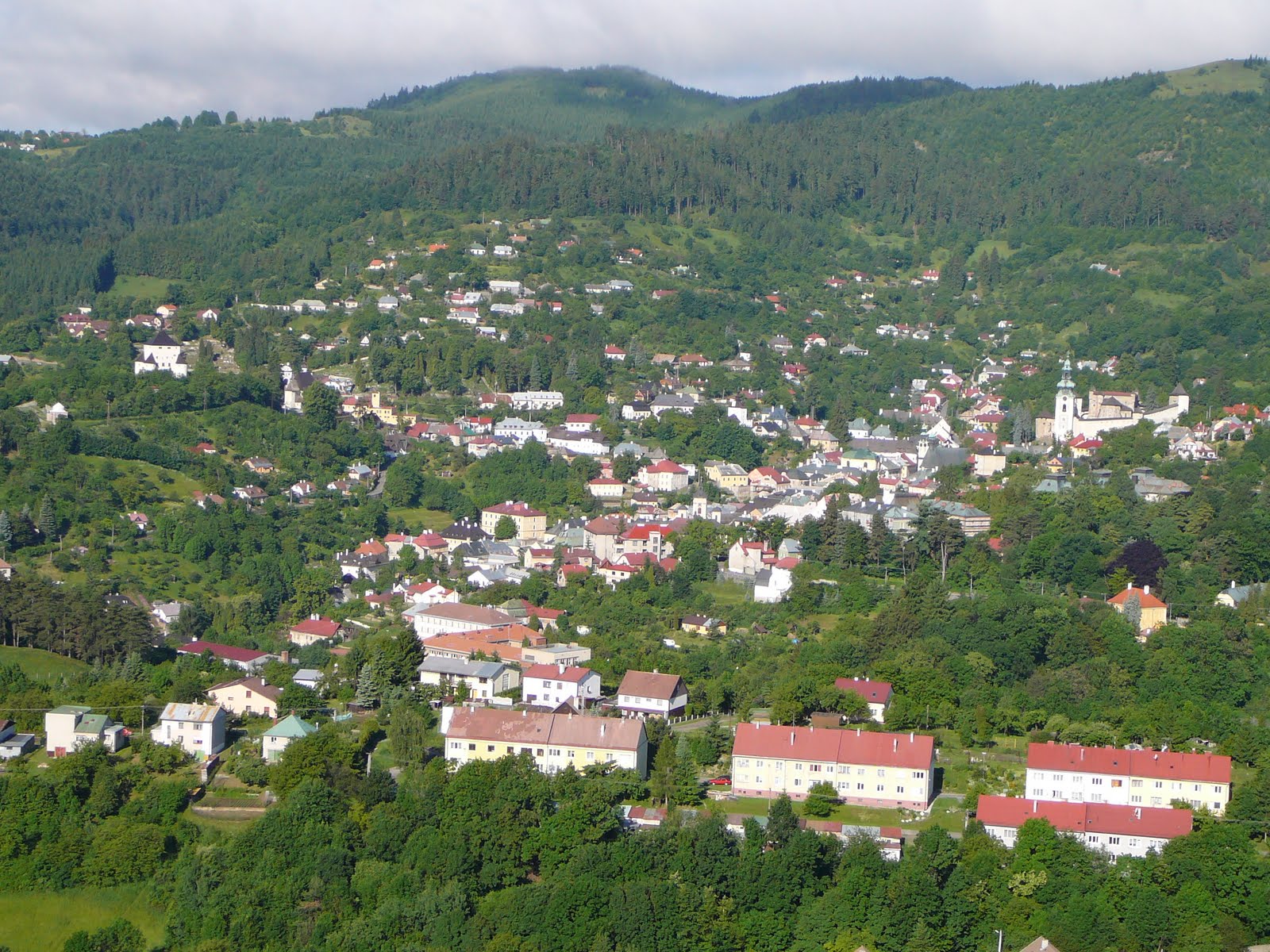 |
| The view! |
 |
| The Lutheran church |
 |
| Inside |
Some of the architecture...
 |
| A former hotel |
 |
| A city building |
 |
| A clock with a carillon |
 |
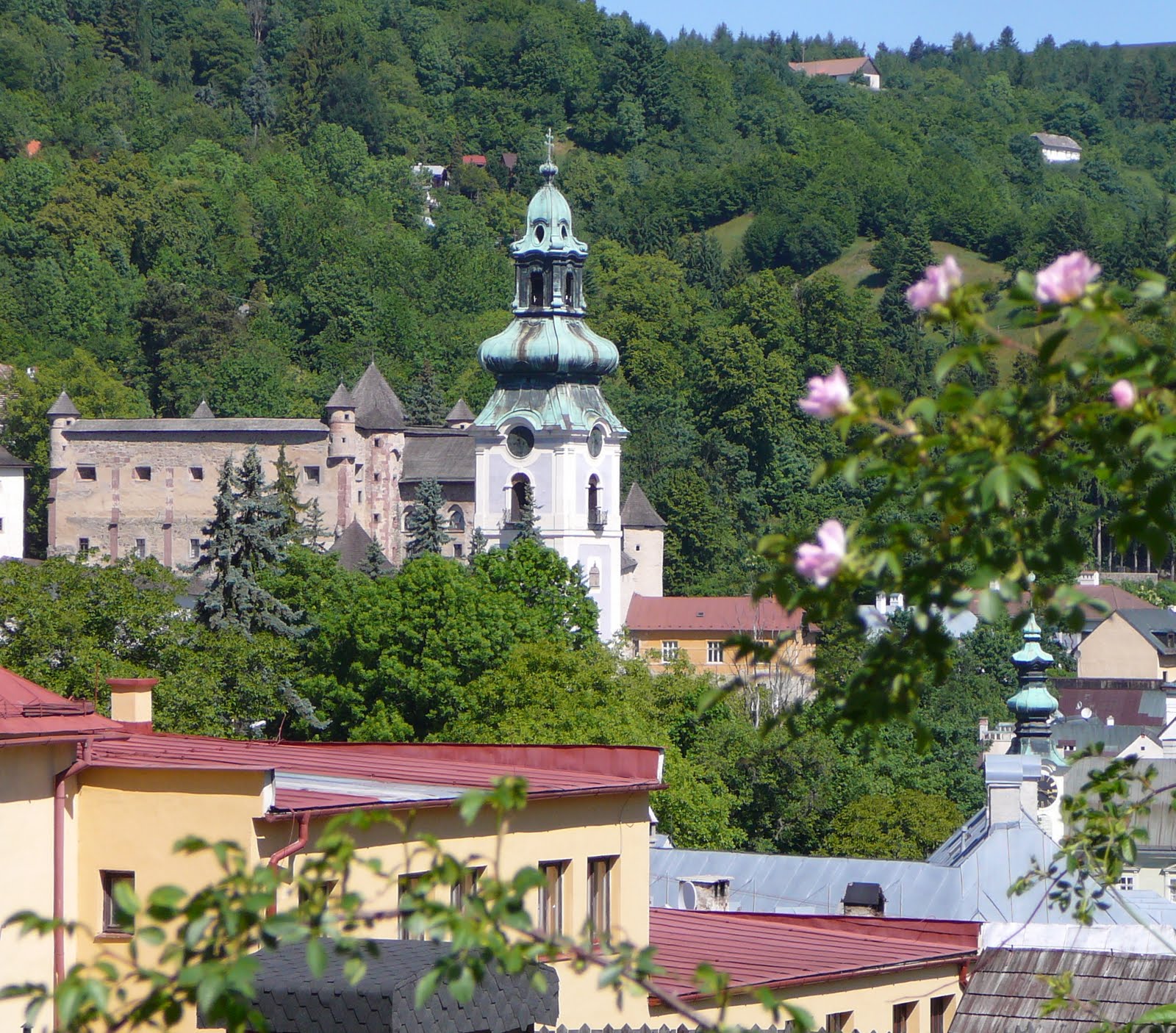
| The "New" Castle |


