Saturday, July 2, 2011

Wind Up

 So--is it wind, with a long i, and if so, is it the prelude to a pitch or something's end?  Or is it wind, with a short i, and does that mean the air outside is moving, and we'll move with it?  Both, or all three, actually.  We finished an academic year, we anticipate a great summer which makes us look forward to a second year, and we are willing to see where the breeze might blow us next.
 A church service ended the school year on June 30 with celebration and a few tears, but before that we wound up the year with a bang (not a whimper).  We'll picture three events for the blog.  Modra (get out your maps of Slovakia) features many good wineries, and Slovakia's only "high school" focusing on oenology.  Christy, pictured with Paula, is friends with Riko, translating for his father in the second picture.  Pan Schoen (his father) runs the winery (the building behind Paula and Christy) where students are apprentices.  Got all of that?  We went on a Sunday afternoon tour and tasting.

Grapes are just beginning to appear; they do both whites and reds, but as with most of Slovakia the major focus is on white.  The growing season is just not long enough nor the summers hot enough to produce good red wine in quantity.
 A nineteenth century chateau houses the winery.  The working area and first floor are renovated beautifully, and the table is waiting for tasting, instruction in drinking wine, and wonderful conviviality.  Things get even more convivial as each wine is tasted.

 The following weekend we donned our T-shirts and other work duds to participate in Naša Bratislava, a volunteer effort to help city officials clean up and beautify the city.  Our International Church group went to the Pisztory Palace, a nineteenth century residence built by a very well-to-do pharmacist.  The building's history included use as a residence, as the Third Reich's embassy, as the Lenin Museum, and (briefly) as a catch-all museum and reception space for Slovakia. The palace fell into disrepair after 1996, and Bratislava City would like to see it restored.  To do so, of course, takes money, and money comes from investors who can see possibilities.
 We stood around and scratched our heads and wondered what to do.  As you can see, the courtyard's weeds and small trees outnumbered the workers.  Fortunately a group the day before cut down much of the underbrush, so we could at least see the challenge.

 Unfortunately, no one had come around to haul material away from the work the day before, so we tried to figure out how to tackle the problem.  "Salve", Latin for "save", seemed an appropriate plea from the floor tile in the entry.


Challenges to the inside cleaners probably exceeded those of the outside cleaners because of the dust.  The Soviets did not love lavish decoration much, and they painted over many ceilings when the mementos of Lenin arrived.  However, in some cases they installed false ceilings instead of using paint, so after the Velvet Revolution lovely decoration survived.


Finally, the arrival of a small dump truck brought a smile to the faces of workers inside and out--even the ones wielding fierce cutters against intractable roots.
 

 The next day Allan poured the champagne and we toasted our director as she celebrated the nearing of the end of the school year and a half century of life by hosting the American teachers, the school's website developers, and a smattering of others.  Edita always spreads a great feast, and we ate aplenty.


 Edita's daughter, who had just spent the year in North Dakota (brrrr) as an exchange student, composed a moving poem (in English!) for her mom, and read it for all of us. The guests became a willing cleanup crew (much better than the day before!).

This will be the last post until September.  Our first year moved us, surprised us, and gave us an appreciation for Central Europe generally and Slovakia particularly.  Slovakia is a very old country, and a very new one.  The Evanjelicke Lyceum is a very old school, and a very new one.  These dichotomies make for a peculiar environment in which we can learn from the Slovaks and they from us. It is a unique and wonderful opportunity.


Saturday, June 4, 2011

Banská Štiavnica


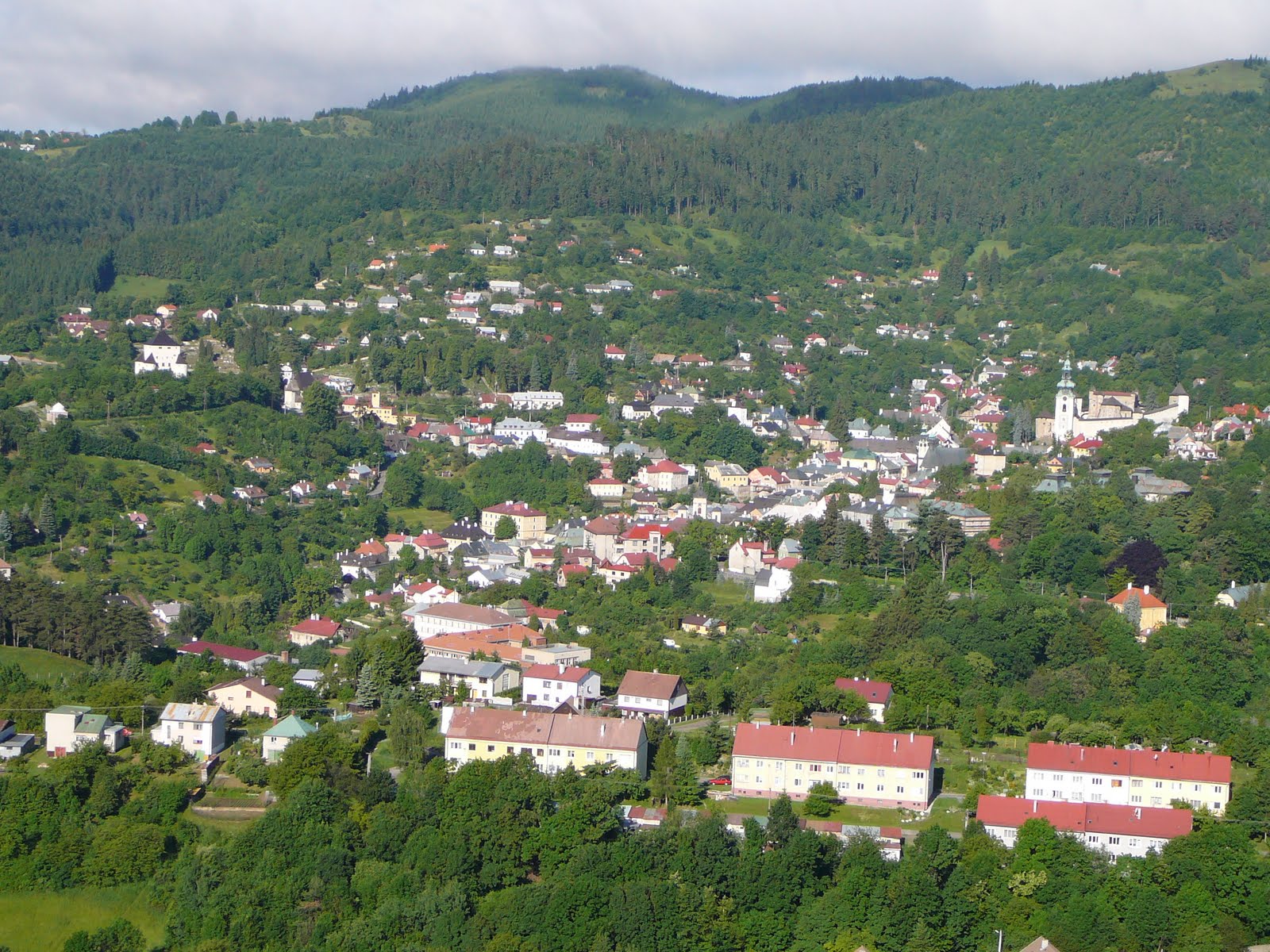
We ventured into Central Slovakia for the first time, to Banská Štiavnica.  After enduring a one-hour railway workers' strike, we took three trains to reach our destination.  A small town now south of Banska Bystrica and Zvolen, it has been focused on mining since the twelfth century, or perhaps longer.  That area of the Small Tatra range has, or has had, rich deposits of precious, semi-precious, or just plain useful minerals.  At one time the area boasted the richest deposits of gold and silver anywhere in Europe, and in the sixteenth century the Hapsburgs used the treasure pulled out of these mountains to finance the wars against the Turks, and to pay for the Counter-Reformation In Central Europe.  

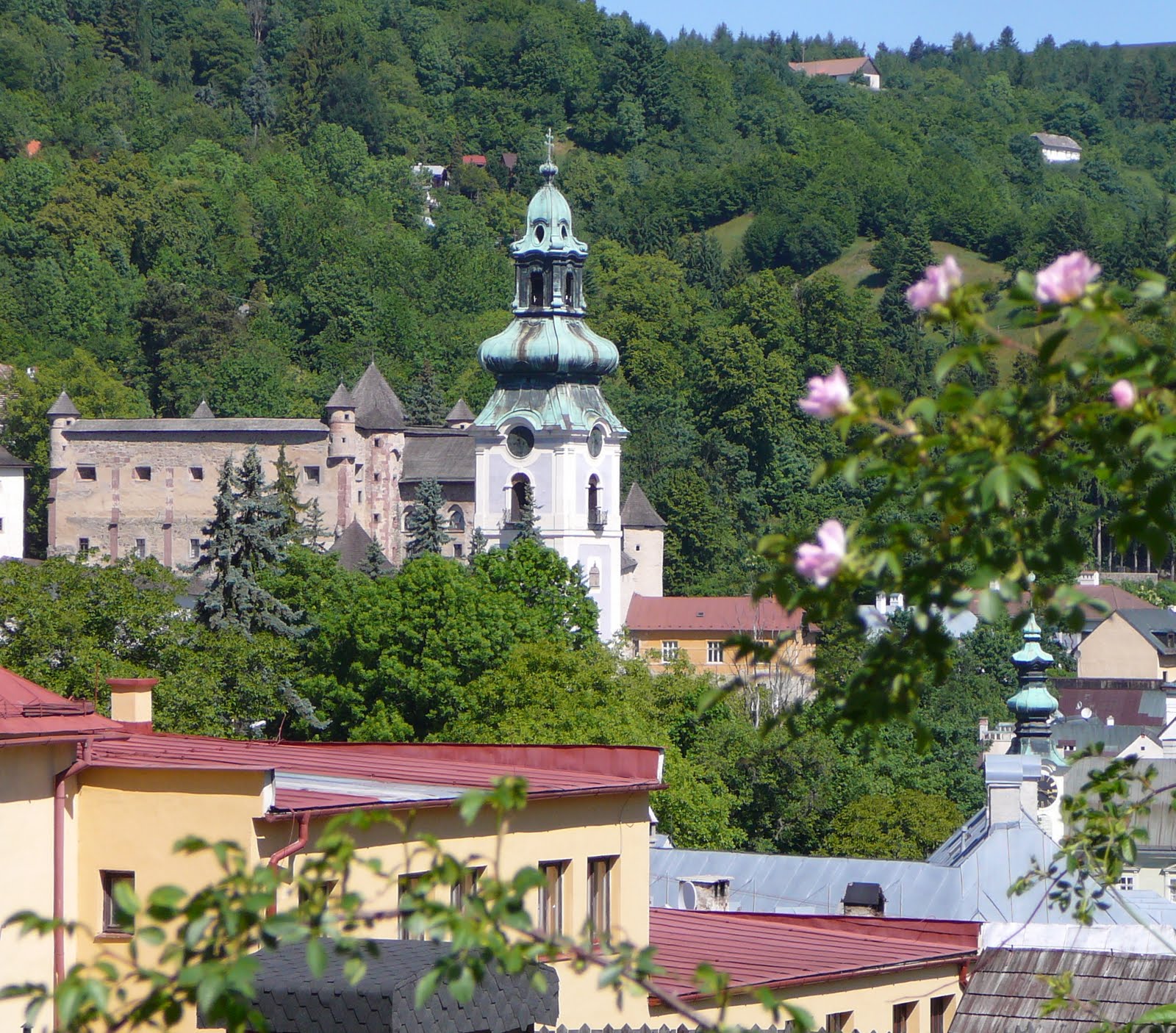
We visited the old castle (a forttification born of a church, built between 1552 and 1559), toured an open-air mining museum, saw a wonderful mineral exhibit, and took in much of the sixteenth- and seventeenth-century architectural glory of the town.  When the area produced wealth, many Austro-Hungarian swells built palaces, and "like a fossil preserved in amber,  Banská Štiavnica is a town frozen in time."  Of course, it helps that the town became a UNESCO World Heritage Site in 1972 and the Norwegians came with their North Sea Oil money to finance restoration.  And--we ate well!  We'll let pictures tell the story.  Sunday morning dawned clear, so we hiked up to Calvary, a 1930s stations-of-the-cross exercise up a steep hill.  The stations and three chapels are pretty run down now, but the views are unparalleled. We only got a chance to walk around the New Castle (so named because it was built five years after the old one) before we had to head home.
But things got better...

The column on the right is for delays.


The Horse we came in and left on.
The Old Castle...


Let me in!

The basilica which became a fortress.

Beginning a BBQ, but we didn't get invited
An archer's view
Inside the chapel-turned-mortuary
A sixteenth-century fresco


The well could be drained and used for escape
 

The city
Hungary, including Slovakia
The Miners' Gild (crossed hammers)


A metal door is a metal door, unless it has seventeenth century graffiti
The wooden steps only date from 1772
Lilliput, or Wonderland?


Going to work in a mine
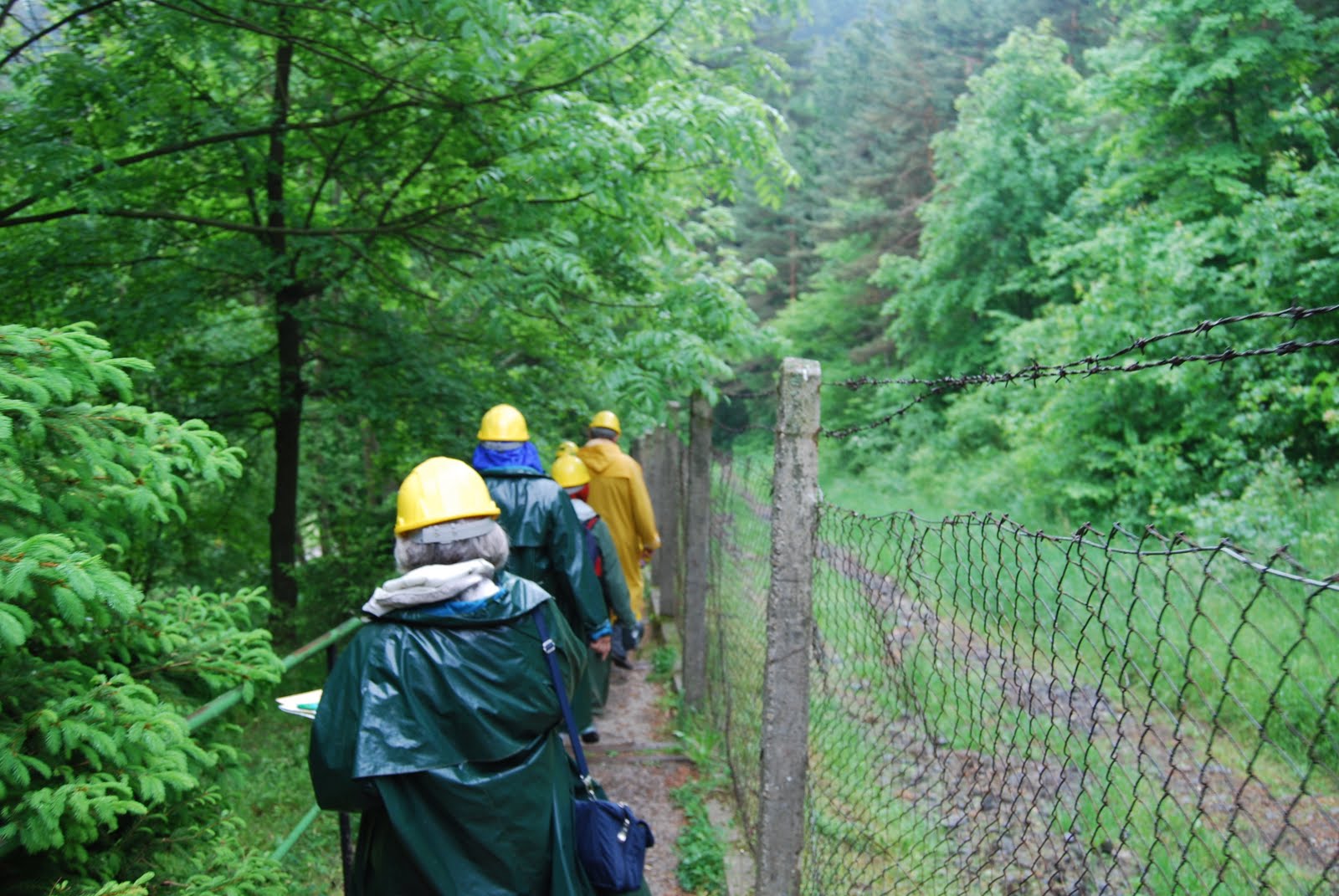
Young or old, hard hats are in

Follow the yellow hats....


but don't touch the wires!
The necessary room
Crossed hammers in the mine
Modern mining
Above ground

Wonderful food
This is goulash?

Climbing to Calvary early Sunday
Making progress....


Near the top
The view!

The Lutheran church

Inside

Some of the architecture...

A former hotel

A city building

A clock with a carillon


The "New" Castle